



There’s something undeniably refreshing about biting into a juicy watermelon on a hot summer day-but serving it up in perfectly uniform sticks? That’s an art form all its own. Welcome to Slice Smart: The Ultimate Guide to Cutting Watermelon Sticks, where we transform a messy, slippery fruit into neatly carved, ready-to-eat delights. Whether you’re prepping for a backyard barbecue,a picnic,or simply a healthy snack,mastering the technique of slicing watermelon sticks not only elevates your presentation but also maximizes enjoyment and minimizes waste. Ready your knives and chill your melon-it’s time to slice smart and savor every sweet, succulent bite.
Slice Smart: choosing the perfect watermelon and mastering the art of precise cutting sets the foundation for vibrant, juicy watermelon sticks that are as visually stunning as they are delicious.Whether you’re prepping for a sun-drenched picnic, a refreshing summer snack, or a complex fruit platter, understanding how to select your watermelon, wield the right knives, and slice wiht confidence transforms a simple fruit into edible art.
Choosing the Perfect Watermelon for Ideal Sticks
Opt for a watermelon that boasts a deep green rind with a creamy yellow belly spot – that sun-kissed patch signals ripeness. Tap the melon, and listen for a deep, hollow sound indicating juiciness inside. A medium to large-sized watermelon with a uniform oval or round shape usually yields the most consistent flesh for uniform sticks. Firmness matters: avoid melons with dents or soft spots, which suggest overripeness or bruising. The flesh should be luminous red or pink with tightly packed seeds or seedless varieties, perfect for neat, snackable sticks.
Mastering the Tools: knives and Techniques for Precise Slicing
Before slicing, equip yourself with a sharp chef’s knife – ideally 8 to 10 inches long – for effortless, clean cuts. A serrated edge can tear the delicate flesh, so keep to smooth blades. Your cutting board should be stable and non-slip; placing a damp towel beneath helps maintain safety and precision. Holding the watermelon steady with your non-dominant hand, always slice vertically first to create a stable flat base if needed. Use long, smooth strokes with even pressure for clean watermelon sticks. Avoid sawing motions; they bruise and bruise the fruit’s vibrant flesh.
Step-by-Step Guide to Creating Even Watermelon Sticks
- Cut off both ends: Slice about half an inch from each end to create flat, stable surfaces.
- Stand the watermelon upright: Use one of the flat ends as a base so it won’t wobble.
- Peel the rind: Carefully slice downward around the curve of the watermelon,following its shape until all skin and white pith are removed.
- Slice into thick slabs: Cut the peeled watermelon vertically into 1-inch thick slabs-the foundation for your sticks.
- Cut slabs into sticks: Turn each slab on its side and slice lengthwise into 1-inch-wide sticks. Aim for uniform size to ensure delightful bite-sized pieces.
- Trim for polish: Optionally, square off any uneven edges for perfectly symmetrical watermelon sticks.
Tips for Serving and Storing Watermelon Sticks to Maximize Freshness
Serve watermelon sticks chilled for that ultimate refreshing crunch. Present them on a platter with a sprinkle of fresh mint leaves or a dusting of chili powder for an exciting flavor boost. pair them beautifully with tangy dips like Greek yogurt mixed with lime zest or honey for a sweet contrast.To store, place sticks in an airtight container, layering parchment or paper towels between them to absorb excess moisture. refrigerate and consume within 2-3 days for peak taste and texture. Avoid freezing sticks whole, as the texture softens, but freezing diced watermelon works well for beverages or smoothies.
Prep and Cook Time
- Preparation: 15 minutes
- Cooking: None
- Total Time: 15 minutes
yield
Makes approximately 20 watermelon sticks (serves 4-6)
Difficulty Level
Easy - Perfect for beginners and fruit lovers alike.
Ingredients
- 1 medium seedless watermelon (about 8 lbs), ripe and firm
- Fresh mint leaves (optional, for garnish)
- Chili powder or tajín (optional, for serving)
- Greek yogurt or honey (optional, for dipping)
Instructions
- Prepare your workspace: Secure a large, non-slip cutting board and ensure your chef’s knife is razor-sharp.
- Cut off the ends: Trim half an inch from both ends to create stable bases for slicing.
- Remove the rind: Stand the watermelon upright and carefully slice downward, following the curve to remove all green skin and white pith.
- Slice vertically into slabs: Lay the peeled watermelon on its side, then slice into 1-inch-thick slabs evenly.
- Cut each slab into sticks: Turn each slab on its side (long edge down) and slice into 1-inch sticks using long, smooth strokes.
- Trim edges if desired: Square off or neaten any uneven edges to create polished sticks.
- Chill and serve: Place the sticks in the refrigerator for 30 minutes before serving chilled with optional garnishes or dips.
Chef’s Notes
- Seeded vs. seedless: Both work, but seedless watermelons make slicing easier and eating more enjoyable.
- Knife care: Wipe your knife occasionally to remove sticky juice and maintain clean cuts.
- Variation: Try sprinkling the sticks lightly with lime juice for a citrusy zing.
- Make-ahead: Watermelon sticks can be pre-cut and stored airtight for up to 2 days without losing crispness.
Serving Suggestions
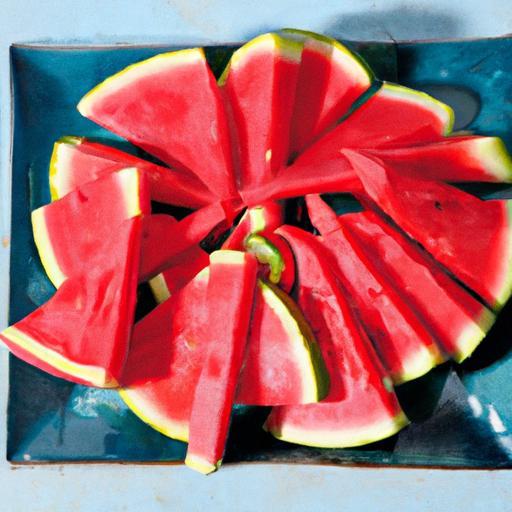
Arrange your watermelon sticks on a large wooden board or colorful platter. Garnish with torn fresh mint leaves and a light dusting of Tajín chili powder for a tantalizing sweet-spicy twist. Include a small bowl of honey or creamy Greek yogurt on the side for dipping. Alternatively, use watermelon sticks as refreshing skewers with cubes of feta cheese, cucumber, and fresh basil for a gourmet fruit appetizer. Pair alongside chilled beverages like iced herbal teas or sparkling water to complement this hydrating treat.
| Nutrient | Per Serving (4 sticks) |
|---|---|
| Calories | 60 kcal |
| Protein | 1 g |
| Carbohydrates | 15 g |
| Fat | 0.2 g |
| Fiber | 0.5 g |

For more tips on fresh fruit preparation, visit our Fresh Fruit Cutting Guide and discover expert techniques to elevate your culinary skills. For authoritative advice on selecting quality produce, check out Harvest to Home’s Watermelon Picking Guide.
Q&A
Q&A: Slice Smart - The ultimate Guide to Cutting Watermelon Sticks
Q1: why slice watermelon into sticks instead of customary wedges?
A1: Watermelon sticks are a game-changer for snacking! Unlike wedges,sticks offer the perfect bite-sized shape-easy to hold,less messy,and ideal for dipping or packing in lunchboxes. They’re visually appealing and make sharing at picnics or parties effortless.
Q2: What’s the best watermelon to choose for perfect sticks?
A2: Look for a watermelon that feels heavy for its size with a uniform shape. A bright, symmetrical rind and a slightly dull sheen frequently enough mean ripeness. For sticks, a seedless or low-seed watermelon works wonders, minimizing interruptions when slicing.
Q3: How do I prepare the watermelon before slicing into sticks?
A3: Start by washing the rind thoroughly. Then, cut off both ends of the melon to create flat, stable surfaces. This stability is crucial for safe, precise slicing. Next, stand the melon upright on one of the flat ends before peeling off the rind carefully in vertical strips.
Q4: What’s the safest and most efficient way to cut watermelon sticks?
A4: After peeling, cut the watermelon into thick slabs about 1 to 1.5 inches (2.5 to 4 cm) high. Lay each slab flat and slice it lengthwise into 1-inch wide sticks. Keeping a sharp knife and steady hands makes all the difference – a serrated knife can also work wonders for clean cuts.
Q5: can I customize the size or shape of the sticks?
A5: absolutely! While classic sticks are rectangular and uniform, you can experiment with thicker or thinner cuts depending on your needs. For kids, slightly thicker sticks hold up better to eager snacking, while thinner sticks offer a lighter, crisp bite.
Q6: How should I store watermelon sticks to keep them fresh?
A6: Place the sticks in an airtight container lined with a paper towel to absorb excess moisture. Store them in the fridge, where they’ll stay juicy and delicious for up to 3 days. For extra freshness, adding a squeeze of fresh lemon or lime juice before refrigeration can help preserve flavor.
Q7: any creative serving ideas to make watermelon sticks even more enticing?
A7: Definitely! Sprinkle the sticks with a pinch of chili powder or a dash of sea salt for a bold twist.Pair them with a variety of dips like creamy yogurt-based sauces, tangy fruit salsas, or even a cooling mint chutney. The stick shape makes dunking a breeze!
Q8: Is cutting watermelon sticks a good activity for kids?
A8: With proper supervision and a kid-safe knife, yes! Children love helping to shape the sticks, making snack prep fun and educational. It’s a wonderful way to encourage healthy eating habits while involving them in the kitchen.
Q9: how can I avoid the common mess when slicing watermelon sticks?
A9: Work on a large cutting board and keep a damp cloth nearby to wipe juice drips. Using a sharp knife reduces crushing and juice leakage. Also, slicing over a tray or bowl helps catch drips-clean cuts mean less juice running wild!
Q10: Can watermelon sticks be frozen for later enjoyment?
A10: yes! Lay the freshly cut sticks on a parchment-lined tray and freeze them individually until solid. Then transfer to a sealed bag or container. Frozen watermelon sticks are a fantastic, refreshing snack for hot days or to toss into smoothies for natural sweetness.
The Conclusion
Now that you’ve mastered the art of cutting perfect watermelon sticks, you’re ready to turn any summer gathering into a refreshing celebration. With just a few simple steps and a sharp knife, those juicy, vibrant slices will not only look irresistible but also make snacking a breeze. So next time you bring out the watermelon, slice smart and watch everyone reach for seconds-because great technique makes all the difference in every delicious bite. Here’s to effortless slicing and endless summer sweetness!