

Pesto-it’s more than just a vibrant green sauce adorning our pasta plates; it’s a culinary legend that has woven its way thru kitchens and cultures around the world. Born in the sun-drenched hills of Liguria, Italy, this fragrant blend of basil, pine nuts, garlic, Parmesan, and olive oil has transcended its humble origins to become a symbol of freshness, simplicity, and timeless flavor. In “Pesto Unveiled: The Green Sauce That Transformed Cuisine,” we delve into the rich history, artful planning, and the global impact of this emerald elixir that continues to inspire chefs and home cooks alike. Join us as we uncover the story behind pesto’s rise from a regional specialty to an international culinary icon that has reshaped the way we savor food.
Pesto unveiled invites you on an aromatic journey that stretches back centuries to the sun-drenched Ligurian coast of Italy. This vibrant green sauce, bursting with fragrant basil and toasted pine nuts, redefined the way the culinary world celebrates simple, fresh ingredients. More than just a condiment, pesto is a living testament to tradition, innovation, and the irresistible allure of garden-fresh flavors.
Prep and Cook Time
- preparation: 10 minutes
- Cooking: 0 minutes (no cooking required)
- Total Time: 10 minutes
Yield
Approximately 1 cup (serves 4)
Difficulty Level
Easy
Key Ingredients That Define Authentic Pesto Flavor
- 2 cups fresh basil leaves, firmly packed, washed and dried
- 1/3 cup pine nuts, toasted to perfection
- 2 cloves garlic, peeled
- 1/2 cup extra-virgin olive oil, preferably Ligurian
- 1/2 cup freshly grated Parmigiano-Reggiano cheese
- 1/4 cup freshly grated Pecorino Romano cheese
- Salt to taste
- freshly ground black pepper, optional
Creative Twists and Modern Variations to Try at Home
While the roots of pesto lie firmly in tradition, the sauce’s adaptability makes it endlessly exciting. Imagine swapping pine nuts for toasted walnuts or pepitas to introduce a robust depth. For a dairy-free version that doesn’t skimp on creaminess, try blending in toasted sunflower seeds alongside nutritional yeast. You can also surprise your palate by incorporating peppery arugula or shining spinach leaves with basil to add layers of flavor and a pop of color. Roasted garlic instead of raw offers a milder, sweeter aroma, perfect for those new to pesto. The versatility of pesto means you can customize it to your taste while honoring its classic soul.
Step-by-Step Instructions to Perfect Your Homemade Pesto Every Time
- Toast the Pine Nuts: In a dry skillet over medium heat,toast the pine nuts until golden brown,about 3-4 minutes. Stir frequently to avoid burning, than transfer to a plate to cool.
- Prepare Basil and Garlic: Using a food processor or mortar and pestle, combine basil leaves and garlic cloves. Pulse or crush gently until finely chopped and aromatic.
- Add Nuts and Cheese: Add the cooled pine nuts, Parmigiano-Reggiano, and Pecorino Romano to the mixture. pulse a few more times to blend.
- Stream in Olive Oil: with the processor running, slowly drizzle in the extra-virgin olive oil until the pesto reaches a smooth yet slightly textured consistency.
- Season: Taste and add salt and fresh pepper as desired. Pulse briefly to incorporate.
- Store Properly: Transfer pesto to an airtight container. To maintain its vibrant green color, pour a thin layer of olive oil over the surface before sealing. Store in the refrigerator for up to 1 week or freeze portions for longer storage.
chef’s Notes: Tips for Success
- freshness is key: Use basil that is vibrant and free of bruises for maximum flavor and color.
- Toast nuts gently: Watch closely when toasting pine nuts – burnt nuts ruin the delicate balance.
- Batch size matters: Make pesto in small batches to enjoy the freshest taste and best texture each time.
- Olive oil quality: extra-virgin olive oil with a fruity, peppery profile elevates your pesto dramatically.
- Make ahead: Pesto can be made up to 3 days ahead; refrigerate and add fresh oil before serving to revive texture.
- Vegan option: Substitute cheeses with nutritional yeast for a dairy-free, umami-rich sparkle.
Serving Suggestions
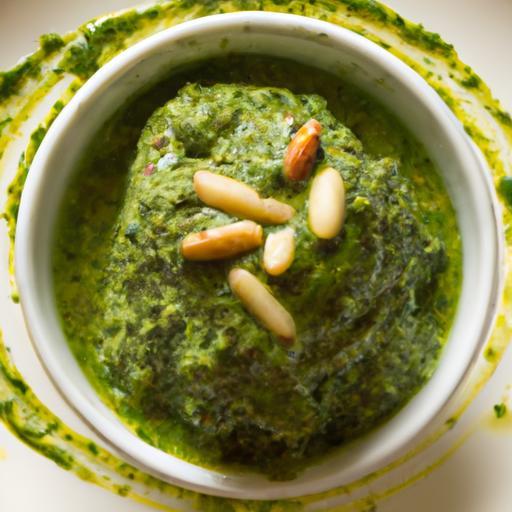
Spread this verdant wonder over freshly boiled pasta,layering it with bright cherry tomatoes for a burst of sweetness. Spoon it onto crisp crostini, topped with a slice of fresh mozzarella for effortless entertaining. It also pairs brilliantly with grilled vegetables or as a drizzle over roasted potatoes. Garnish your dishes with a sprinkle of pine nuts and a few basil leaves to keep the presentation fresh and visually inviting.

| Nutrient | Per 2 tbsp |
|---|---|
| Calories | 190 |
| Protein | 4g |
| Carbohydrates | 2g |
| Fat | 20g |
For more inspiration on classic Italian sauces, check out our guide to classic Italian sauces. Discover the rich history and modern adaptations of timeless recipes that complement the bright flavors of homemade pesto.
Learn more about the culinary heritage of Liguria at Britannica’s Liguria page, the birthplace of pesto, and deepen your appreciation for this legendary green sauce that transformed cuisine around the world.
Q&A
Q&A: Pesto Unveiled – The Green Sauce That transformed Cuisine
Q1: What is pesto, and where did it originate?
Pesto is a vibrant, herbaceous sauce traditionally made by grinding fresh basil, garlic, pine nuts, Parmesan cheese, and olive oil into a fragrant green paste.Its roots trace back to Liguria, a picturesque coastal region in northwest Italy, where the sauce has been cherished for centuries as a culinary jewel.
Q2: Why is pesto considered revolutionary in the culinary world?
Pesto’s magic lies in its simplicity and versatility. It transformed cuisine by proving that a handful of fresh, high-quality ingredients could create a complex, layered flavor profile. Beyond pasta,pesto has inspired countless dishes-from drizzled vegetables and sandwiches to vibrant dips and marinades-making it a sauce that elevates everyday meals.
Q3: How has pesto evolved over time?
While the classic Genovese pesto remains a gold standard, creative chefs and home cooks around the world have embraced the sauce’s format, substituting or adding ingredients like kale, arugula, walnuts, and sun-dried tomatoes. This evolution keeps pesto fresh and adaptable, bridging tradition with innovation.
Q4: What makes basil the star ingredient in pesto?
Basil’s bright, slightly sweet, and aromatic quality acts as the foundation of pesto’s identity. Its essential oils release a burst of flavor when crushed, awakening the senses with each bite. The herb’s freshness balances the richness of cheese and olive oil, creating harmony in every spoonful.
Q5: Can pesto be made without nuts or cheese?
Absolutely! While pine nuts and Parmesan are customary, pesto can easily be adapted for different dietary needs. Nut-free versions might use toasted seeds like sunflower or pumpkin seeds, while vegan pesto substitutes nutritional yeast or plant-based cheeses to maintain that savory depth. The key is balancing the flavors to keep the sauce vibrant and satisfying.
Q6: What dishes beyond pasta work well with pesto?
Pesto’s versatility is astounding. It can brighten up roasted or grilled vegetables, serve as a flavorful spread for sandwiches and bruschettas, be swirled into soups for an herby punch, or act as a marinade base for grilled tofu or vegetables. Its fresh flavor profile consistently adds a garden-fresh note wherever it’s applied.
Q7: How can home cooks make the perfect pesto?
Freshness is everything. Use vibrant basil leaves, high-quality extra virgin olive oil, freshly grated cheese, and toast your nuts lightly for added depth. Pulse gently in a mortar and pestle or blender to maintain texture-over-processing can dim the sauce’s characteristic freshness. Taste and adjust seasoning to strike the perfect balance.
Q8: Why has pesto maintained its global appeal for so long?
Pesto endures because it speaks to our craving for fresh, wholesome flavors that are easy to prepare yet infinitely adaptable. It celebrates simplicity without sacrificing complexity, inviting cooks of all levels to explore and personalize a genuinely timeless sauce.
Whether draped lavishly over pasta or tucked into unexpected dishes, pesto continues to transform and inspire cuisine around the world-one green spoonful at a time.
Closing Remarks
As we’ve traced the vibrant journey of pesto-from its ancient Ligurian roots to its global culinary acclaim-it becomes clear that this emerald-hued sauce is far more than a simple condiment. Pesto is a living testament to tradition,innovation,and the harmonious blend of humble ingredients that together create somthing truly transformative.Whether drizzled over pasta, stirred into soups, or used as a zesty spread, pesto continues to inspire chefs and home cooks alike, proving that sometimes, the simplest flavors have the most enduring impact. So next time you savor that rich, fragrant bite, remember: you’re tasting a piece of history that forever changed the way we experience food.